For most of the last decade, a common way to build an online store was straightforward: find a product with reasonable margins, put it in front of people through paid ads, and scale spend as long as each dollar in returned more than a dollar out. The mechanics were simple enough that the strategy felt almost automatic. That era is fading, not because the channels stopped working, but because they stopped being cheap and predictable.
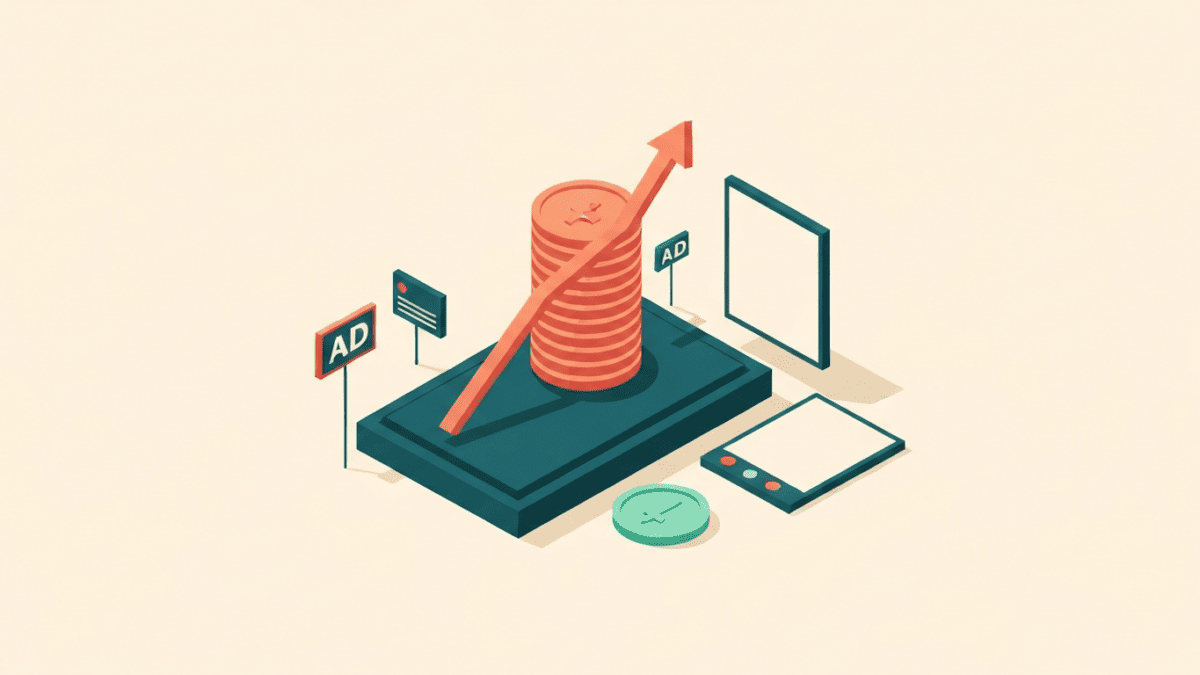
Rising advertising costs have become one of the defining pressures in ecommerce, and the smartest operators are treating them less as a temporary headwind and more as a permanent change in the terrain. The response that holds up is not a clever hack to lower costs. It is a rethink of where growth actually comes from.
Why acquisition keeps getting more expensive
It helps to understand the underlying dynamic before reacting to it. Paid advertising on the major platforms is an auction. Advertisers bid for a limited amount of attention, and the price rises whenever more advertisers compete for the same audiences. Ecommerce has attracted an enormous number of new entrants over the years, many chasing similar customers with similar products, and that crowding pushes prices up on its own.
Layered on top of competition are shifts in how much data platforms can use to target and measure. As privacy expectations and platform rules have tightened, targeting has become blunter and attribution harder to trust. When you can measure results less precisely, you tend to need more spend to feel confident, and inefficiency creeps into the system. None of this is a passing phase tied to one company’s decisions. It is the direction the environment has been moving for some time.
The honest takeaway is that betting your whole business on ever-cheaper traffic was always a bet against gravity. Attention is finite, demand for it is growing, and that combination points in one direction.
The shift from buying traffic to owning relationships
When the first sale gets expensive, the arithmetic of the whole store changes. If it costs a great deal to win a customer, a single purchase may barely break even, or lose money outright. The business only works if that customer comes back. This reframes the goal: you are no longer buying transactions, you are buying relationships that need to pay off over time.
That is why retention has moved to the center of serious ecommerce thinking. A returning customer costs far less to reach than a new one, because you already have permission to contact them and a reason for them to trust you. Every repeat purchase spreads the original acquisition cost across more revenue, which quietly improves the health of the entire operation.
Practically, this means investing in the parts of the experience that happen after checkout: the unboxing, the follow-up, the reorder reminder, the reason to come back. These were once treated as nice-to-haves. In a high-cost acquisition environment, they are where the margin lives.
Owned channels as insulation
The most durable protection against rising ad costs is an audience you do not have to rent. Email lists, SMS subscribers, loyal repeat buyers, and an engaged following are assets you control. You are not bidding in an auction to reach them, and their cost to contact does not spike when competitors flood the market.
This does not make paid channels obsolete. It changes their job. Paid advertising becomes a way to acquire people into owned channels, rather than the only way you ever talk to a customer. A shopper found through an expensive ad becomes far more valuable once they join your list and can be reached repeatedly at little marginal cost.
Building these channels takes patience, and it rewards brands that give people a genuine reason to opt in and stay: useful content, real service, products worth returning for. There is no shortcut, but there is a compounding payoff. An owned audience built this year keeps working next year, while an ad campaign stops the moment you stop paying.
Margin, AOV, and lifetime value become the real levers
If you cannot easily lower what it costs to acquire a customer, the other side of the equation matters more: how much that customer is worth. Three levers do most of the work here.
- Margin determines how much room you have to pay for acquisition in the first place. A product with thin margins simply cannot absorb high ad costs, which is why margin discipline has become a survival trait rather than a finance concern.
- Average order value stretches each transaction further. Thoughtful bundling, complementary products, and clear reasons to add one more item can meaningfully change whether a paid sale is profitable.
- Lifetime value ties it all together. When customers buy repeatedly, you can afford to pay more up front than a competitor who only ever sees a single purchase, which is itself a competitive advantage.
Brands that understand these numbers deeply can make disciplined decisions about how much to spend and where. Brands that do not tend to overpay for customers who never return, and the losses hide until they do not.
Diversifying how people find you
Concentration is the deeper risk. A store that depends on one platform for most of its customers is exposed to every change that platform makes, from pricing to policy to the mysterious swings in performance that operators know well. Diversification is the antidote.
Organic discovery through search, content that answers real questions, a presence where your customers already spend time, referrals from satisfied buyers, and partnerships all bring people in through doors that do not have an auction attached. Each of these tends to be slower to build than paid ads and harder to switch on instantly. That is exactly why they are valuable: the effort is a barrier that protects you once you have done the work.
The goal is not to pick one perfect channel. It is to assemble a mix, so that no single cost increase or algorithm change can threaten the whole business at once.
What this means for how you operate
Rising ad costs reward a particular kind of ecommerce brand: one that knows its numbers, treats customers as relationships rather than transactions, builds audiences it controls, and finds people through many doors rather than one. None of this is exotic, and none of it promises to make advertising cheap again. What it does is reduce your dependence on advertising staying cheap, which is a more realistic thing to aim for.
The operators who thrive from here will likely be the ones who stopped asking how to lower their cost per click and started asking how to make each customer worth more and easier to reach again. That is a harder question, but it is the one the environment is now asking of everyone.