This is an illustrative scenario composited from common patterns, not a specific company. Figures are illustrative.
Third-party marketplaces are a powerful way to reach buyers who are already searching and ready to purchase. But a seller whose entire business lives on one marketplace is, in an important sense, a tenant: the platform owns the customer relationship, holds the contact data, sets many of the rules, and can change fees or rankings at will. This composite examines how such a seller can build ownership of the customer without walking away from the demand the marketplace supplies.
The situation
In our scenario, a seller has built a healthy, single-product-line business almost entirely on one large marketplace. Orders are consistent, but the marketplace keeps the buyer’s contact details, so the seller cannot email past customers, cannot easily build a brand relationship, and competes on a crowded results page where a rival can undercut price or a fee change can compress margin overnight. In illustrative terms, effectively all revenue flows through this one channel, and repeat purchases happen — but the seller has no direct way to prompt them.
The seller recognizes the strategic fragility of renting demand and wants to own more of the relationship, without sacrificing the discovery and trust the marketplace provides.
The challenge
The central challenge is dependence combined with a data blind spot. Because the marketplace intermediates the relationship, the seller lacks the two assets that make a business durable: a direct line to past buyers (email or SMS consent) and the purchase history needed to market intelligently. Without those, every sale is effectively a first sale, and customer lifetime value is capped by the platform’s willingness to surface the listing again.
The obvious-but-wrong move is to abruptly pull back from the marketplace to “force” traffic to a new store. That discards the seller’s most reliable source of discovery before the direct channel can stand on its own, and it ignores a practical constraint: marketplaces restrict how sellers may contact or divert buyers, so any bridge to the direct channel must respect those rules.
The approach
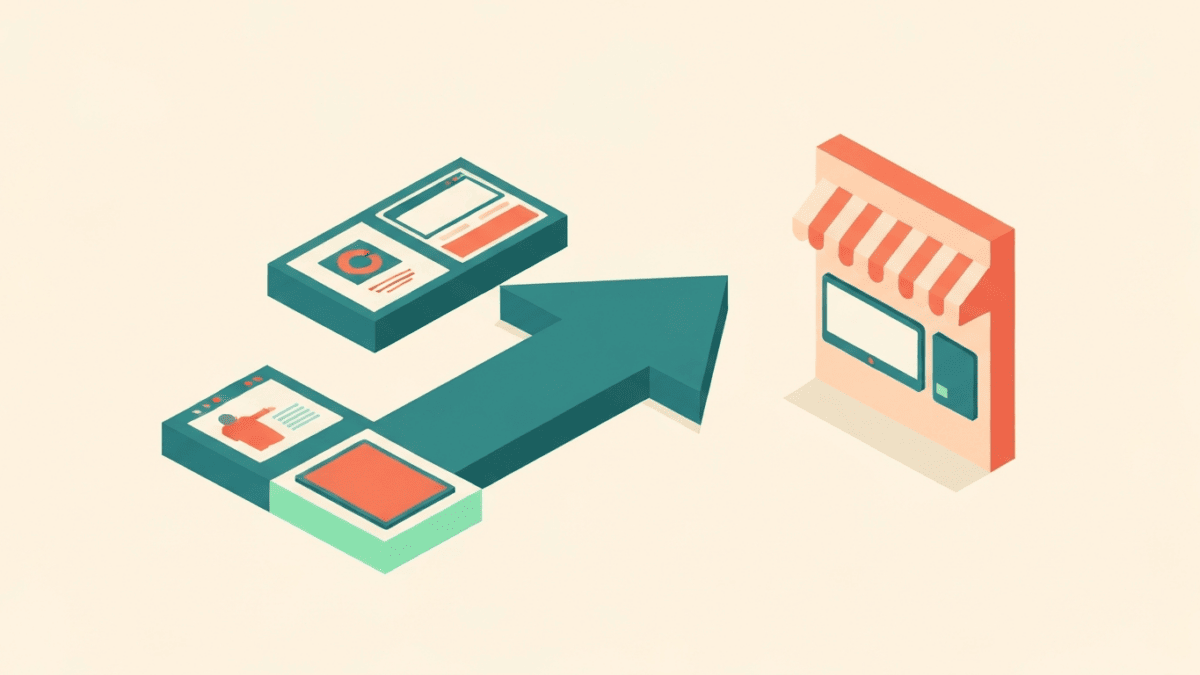
The approach in our composite is to build the direct channel alongside the marketplace and to convert marketplace buyers into owned relationships through legitimate, value-based touchpoints.
Step 1 — Stand up a real direct storefront
The seller builds a simple but credible own-branded store with its own checkout, so there is somewhere for an owned relationship to live. The store is not expected to generate significant traffic on day one; its job is to be the destination for demand the seller can influence directly.
Step 2 — Create legitimate bridges to ownership
Within the marketplace’s rules, the seller includes product-insert cards and packaging that invite buyers to register their product, access a warranty or usage guide, or join a customer community — value-first reasons to opt in that also capture consent to be contacted directly. The framing matters: these are genuine post-purchase services, not thinly disguised attempts to poach, and they stay inside what the platform permits.
Step 3 — Give buyers a reason to reorder directly
For a consumable or replenishable product, the direct store offers a subscription or reorder convenience, bundles, or a loyalty perk that the marketplace listing does not. The direct channel competes not on undercutting the marketplace price but on relationship and convenience — reasons a satisfied buyer would choose to come back through the front door.
Step 4 — Run both channels and measure the shift
Rather than declaring a winner, the seller runs both in parallel: the marketplace continues to do what it does best — put the product in front of new, high-intent shoppers — while the direct channel captures and monetizes repeat demand. Success is measured not by marketplace share falling, but by the size of the owned audience and the repeat-purchase rate the direct channel produces.
The results (illustrative)
In this composite, the parallel strategy steadily converts rented demand into an owned asset. The product inserts and registration incentives begin building an email list of consenting past buyers — an asset the seller previously had no way to accumulate. With that list and purchase history in hand, the seller can, for the first time, prompt replenishment, announce new variants, and cultivate repeat purchases directly, lifting customer lifetime value beyond what the marketplace alone allowed.
Crucially, the marketplace is not abandoned. In our illustrative framing, it keeps supplying first-time discovery, while a growing share of repeat revenue migrates to the direct store where margin is healthier and the relationship is owned. Over time the business becomes materially less fragile: a fee increase or ranking change on the marketplace still stings, but no longer threatens the whole enterprise, because a meaningful base of demand now lives on a channel the seller controls. The lesson is that ownership of the customer is built gradually and in parallel — you convert the marketplace’s discovery into your own retention, rather than betting the business on an overnight exit.
Key takeaways
- Marketplace success is rented, not owned. Without the customer’s contact data and purchase history, every sale behaves like a first sale and lifetime value is capped by the platform.
- Build the direct channel in parallel. Let the marketplace keep doing discovery while a branded store captures and monetizes repeat demand; do not exit overnight and lose your discovery engine.
- Bridge to ownership with genuine value. Product registration, warranties, guides, and communities capture consent legitimately and within marketplace rules — they are services, not poaching schemes.
- Compete on relationship, not price. Give buyers real reasons to reorder directly — subscriptions, bundles, loyalty — rather than undercutting your own marketplace listing.
- Measure the right shift. Track owned-audience growth and repeat-purchase rate; durability comes from how much demand you control, not from how quickly you leave the platform.