What “headless” actually means
In a conventional store, the frontend and the backend are joined. The same platform that manages your products, cart, and checkout also renders the pages shoppers see, and your theme is the layer that ties them together. It is convenient because it all ships as one system.
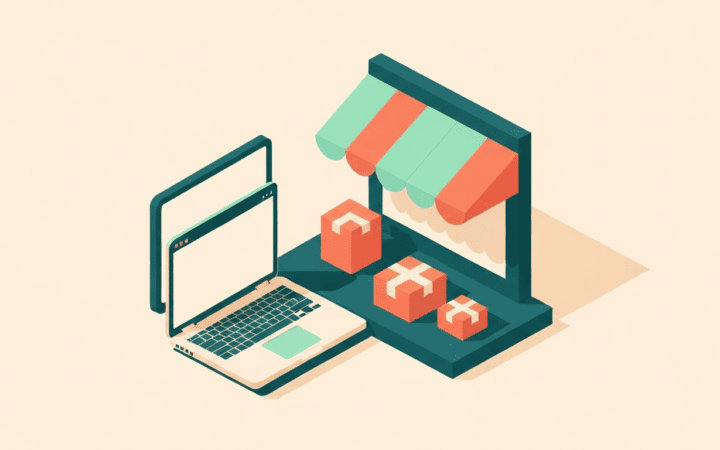
Headless commerce decouples those two halves. The “head” is the frontend, the presentation layer, and removing it means the customer-facing experience is built separately and talks to the commerce backend through APIs. The backend still does what backends do: hold the catalog, manage inventory, run the cart, process checkout. But instead of also generating the pages, it exposes that functionality as data and services that a frontend you control calls on demand. You are, in effect, building your own storefront and plugging it into a commerce engine.
That is the whole idea, and everything else, the benefits and the costs, follows from it. Splitting the two gives you freedom on the frontend, and it hands you the responsibility of building and maintaining that frontend yourself.
What going headless actually buys you
There are real, concrete advantages, and it is worth being precise about them rather than treating “headless” as a synonym for “better.”
- Frontend freedom. Because you are not bound by a theme’s structure, you can build practically any experience you can design and code. Interactions and layouts that a conventional theme fights you on become possible.
- Performance headroom. With full control over how pages are built and delivered, a skilled team can optimize aggressively, loading exactly what is needed and no more. This is headroom, not a free win, since a poorly built headless frontend can be slower than a good theme.
- Multi-channel from one backend. Because the backend serves data through APIs rather than fixed pages, the same product and inventory source can feed a website, a mobile app, in-store screens, or other surfaces. One source of truth, many faces.
- Cleaner integration boundaries. Swapping or adding pieces of your stack can be more contained when the frontend and backend already communicate through defined interfaces.
Notice that every one of these matters most at a certain scale or with a certain kind of ambition. They are genuine advantages, but they are advantages for specific situations, not universal upgrades.
What it costs you
The honest part of this discussion is the cost, because it is easy to undersell. Going headless converts a set of problems your platform used to solve for you into problems you now own.
- You need developers. This is the big one. A themed platform lets a capable non-developer launch and run a store. Headless requires building the frontend and keeping it working, which means ongoing engineering, not a one-time project.
- More moving parts. A decoupled architecture is more systems talking to each other, which means more infrastructure to run, more integration points to watch, and more places for something to break.
- Maintenance is now yours. With a conventional platform, a lot of maintenance and updates happen for you. Split things apart and much of that upkeep, along with responsibility for security and reliability on your custom frontend, shifts onto your team.
- Features that came built-in may need rebuilding. Conveniences a themed platform provides out of the box can require deliberate work to reproduce on a headless frontend. Things that were free are now scoped tasks.
None of this makes headless bad. It makes it a serious commitment that trades convenience for control. The question is whether you need that control enough to pay for it in people and time, indefinitely.
When a conventional store is the right answer
For most small and mid-size merchants, a standard themed platform is not a compromise, it is the correct tool. Modern themed platforms are fast, flexible, and well supported, and they let you focus your limited time on products, marketing, and customers rather than on maintaining infrastructure. If your storefront needs are served well by a good theme, and for a large share of stores they are, then adopting headless mostly buys you complexity you have to manage.
There is also an opportunity-cost angle that is easy to miss. Every hour and every dollar spent building and maintaining a custom frontend is one not spent on things that more directly move a young or mid-size business. Choosing the conventional path is often the disciplined choice, not the timid one.
When headless starts to make sense
Headless earns its keep when you have specific constraints a conventional theme genuinely cannot meet, and when you have the resources to support it. Concrete signals include: you need a highly custom storefront experience that themes cannot deliver; you are publishing commerce to several channels at once and want a single backend feeding all of them; you have hit real, demonstrated performance or flexibility limits with your current setup, not hypothetical ones; and, crucially, you have the development capacity to build and maintain the frontend on an ongoing basis.
The order of those matters. The deciding factor is rarely ambition alone, it is the combination of a real need and the team to sustain the answer. A store that wants headless benefits but cannot staff the maintenance is signing up for a system it will struggle to keep healthy.
How to decide without the hype
Strip away the framing that headless is inherently more advanced and therefore better, and evaluate it as a trade-off, which is what it is. Walk through a few plain questions:
- What can’t my current store do? Name the specific limitation. If you cannot name one, that is your answer for now.
- Is that limitation costing me, today? A real, present constraint justifies real, present investment. A someday-maybe need usually does not.
- Can I staff it indefinitely? Not just build it, keep it running, secure, and updated. Headless is a standing commitment, not a launch.
- What am I giving up by doing it? Count the convenience, the built-in features, and the focus you trade away, not just the flexibility you gain.
Answer those honestly and the decision usually makes itself. Headless commerce is a genuinely powerful architecture for the stores that need it, and an expensive detour for the ones that do not. Being clear-eyed about which one you are is worth more than any feature list.